
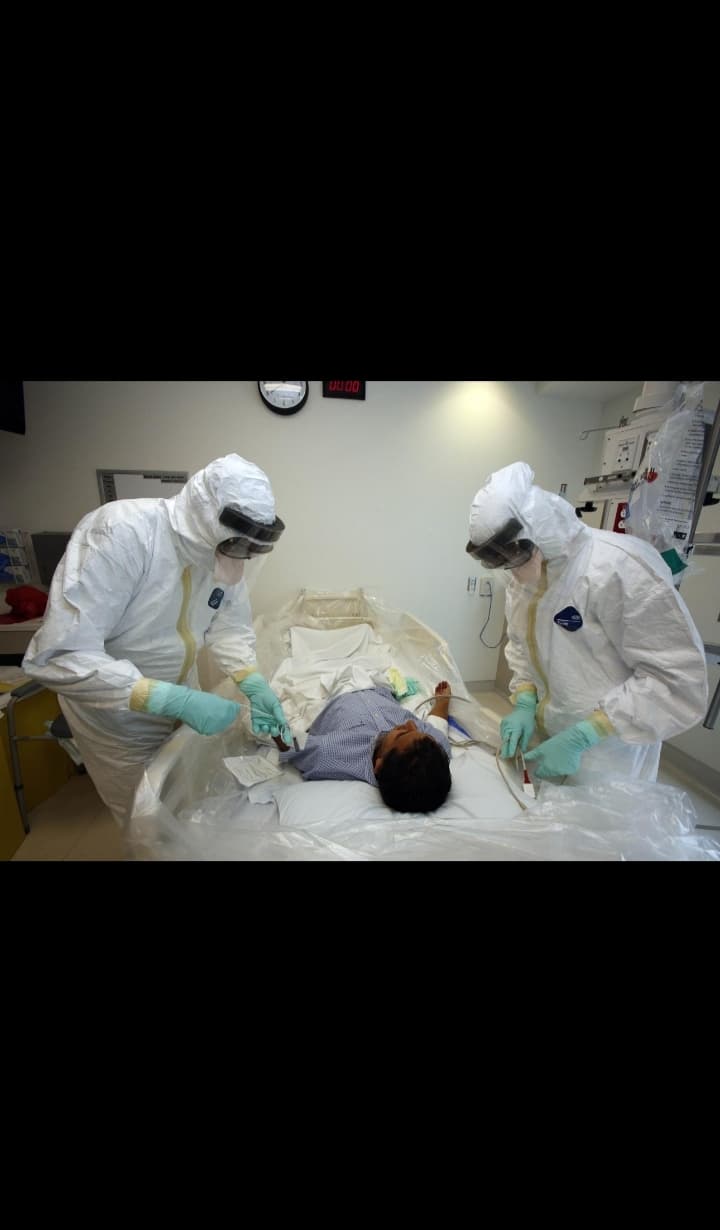
Nigeria's Ebola alert has intensified following confirmation of an imported case of Bundibugyo Ebola virus disease in the Federal Capital Territory.
Nigeria's public health authorities are responding to a confirmed Ebola case in Abuja after a woman with recent international travel history tested positive for the virus on October 20, 2026.
According to the World Health Organization (WHO), the patient developed symptoms on October 7 and sought medical attention at a private health facility in Abuja on October 11. She has been placed in isolation and is receiving medical care. Authorities have identified 44 contacts for monitoring as investigations continue.
The development was confirmed by the Federal Ministry of Health and Social Welfare, which said it was working with the Nigeria Centre for Disease Control and Prevention (NCDC) and other relevant agencies to prevent further transmission.
Patient's condition raises concern
A report published on October 21 by Leadership says the patient's condition has worsened, with multiple organ failure reported by an NCDC laboratory official. Health authorities have not yet established the full chain of exposure, and further official updates are important as the situation develops.
The virus identified is the Bundibugyo strain of Ebola, a type for which there is currently no approved vaccine or specific treatment. Supportive medical care remains essential. https://leadership.ng/ebola-patients-condition-worsens-ncdc/
What does this mean for Nigerians?
The confirmed case calls for vigilance, accurate information and a coordinated public health response. It does not, by itself, mean that Nigeria is experiencing widespread community transmission.
Ebola can spread through direct contact with the blood or other bodily fluids of an infected person who is symptomatic, or through contaminated objects and materials. It does not spread simply because someone shares the same airspace with an infected person in the way that measles or influenza can.
Symptoms can include fever, severe weakness, headache, muscle pain, vomiting, diarrhoea and, in some cases, unexplained bleeding. These symptoms can also occur with other illnesses, so symptoms alone cannot confirm Ebola.
Anyone who believes they have been exposed should contact health authorities promptly, avoid close contact with others if symptoms develop, and follow official medical guidance.
Nigeria's response
Authorities have started contact tracing and strengthened infection-prevention measures at the facility where the patient received care. Airport and public health agencies have also heightened surveillance.
Nigeria previously contained an Ebola outbreak in 2014 through rapid case identification, isolation, contact tracing and coordinated public health action. Health officials are drawing on that experience as the current response continues.
The WHO has called for continued regional preparedness while advising against blanket restrictions on travel or trade with affected countries.
The bigger question: Is Nigeria prepared?
The latest case has renewed debate about hospital preparedness, early diagnosis, airport screening and the ability of public health agencies to respond quickly to emerging infectious diseases.
The priority now is to identify exposed individuals, monitor contacts, protect healthcare workers and communicate verified information to the public.
Instacool will continue to follow developments as credible updates become available.
Sources: World Health Organization (WHO), Nigeria's Federal Ministry of Health and Social Welfare, NCDC and Leadership.
This report is based on information available on October 21, 2026. Details may change as investigations continue.




0 Comments